
Design Insight · La-Z-Boy Columbus
7 Common Living Room Layout Mistakes
And how to fix them.
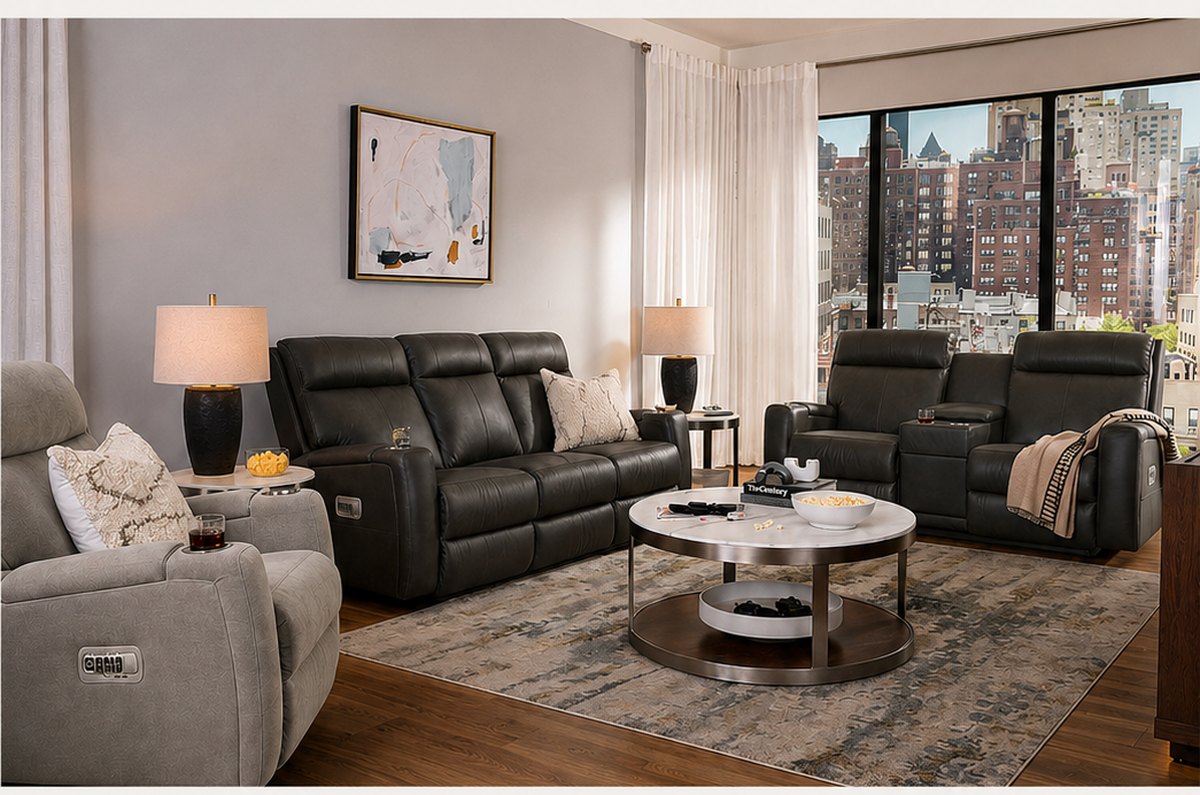
A great room isn't just about beautiful furniture.
It's about how everything fits together.
We see the same handful of layout mix-ups all the time here in the Chattahoochee Valley, and the good news is every one of them is easy to set right once you know what to look for. Here are the seven we run into most.
Pushing Every Piece Against the Walls
It feels like shoving the sofa and chairs flat against the walls will open the room up. Usually it does the opposite. You end up with a big empty patch in the middle and seats so far apart that nobody can talk without raising their voice.
The Fix
Pull the pieces in a little. Floating the sofa a foot or two off the wall, turning a couple of chairs toward each other, and letting a rug anchor the group makes the whole room feel intentional. A cozy conversation area in the center beats a lonely ring of furniture around the edges every time.
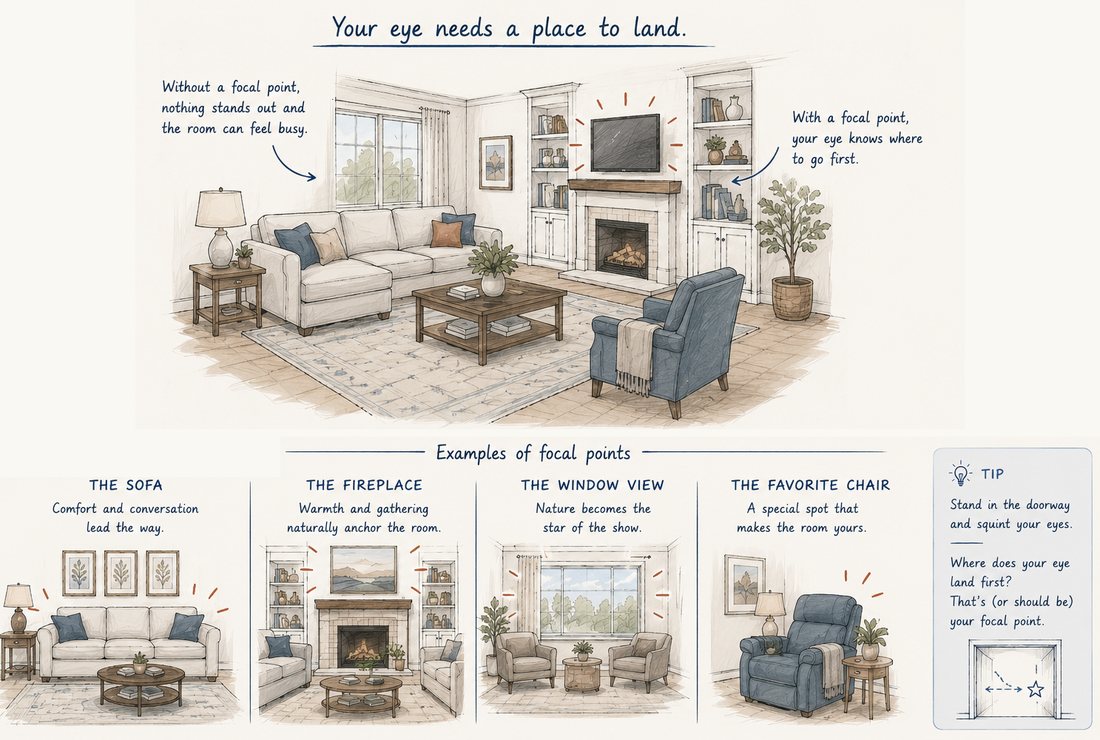
Choosing Furniture That's the Wrong Scale
There are two versions of this. The giant sectional crammed into a small room, so you're climbing over an arm to reach the window. Or the sweet little sofa marooned in a big open space, looking like it wandered in by accident.
The Fix
Measure your room before you fall for a piece. In a smaller space, a well-proportioned sofa and a couple of chairs will feel roomier than one oversized sectional. In a large room, give your seating some company: a bigger sofa, an extra chair, a console behind it. The furniture should fit the room, not fight it.
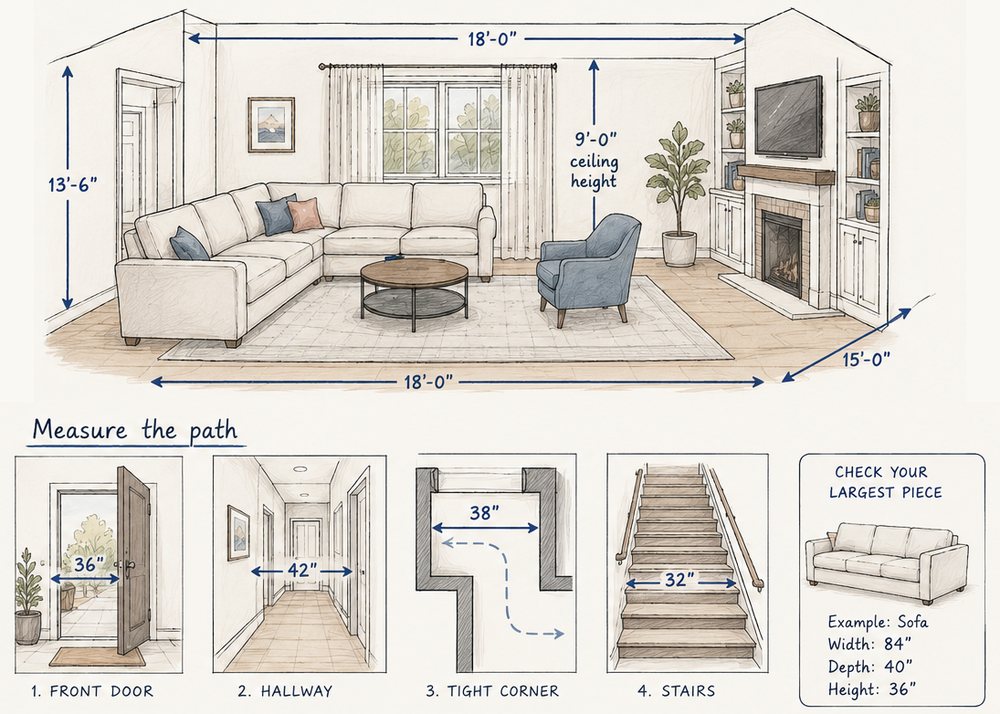
Ignoring How People Actually Move Through the Room
On paper the layout looks great. In real life you're turning sideways to get between the coffee table and the ottoman, and the path from the front door to the kitchen has become an obstacle course.
The Fix
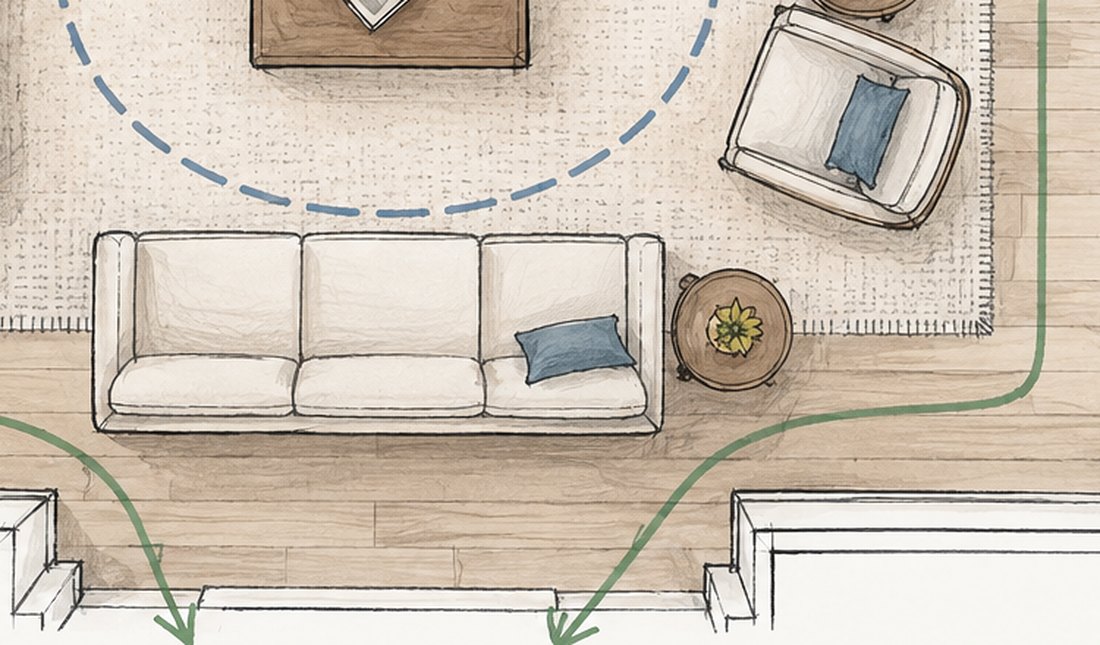
Walk it before you commit. Leave real room around doorways and the main paths through the space, about the width of a hallway. When people can move through a room without a detour, everything feels calmer, even if you haven't changed a single piece.
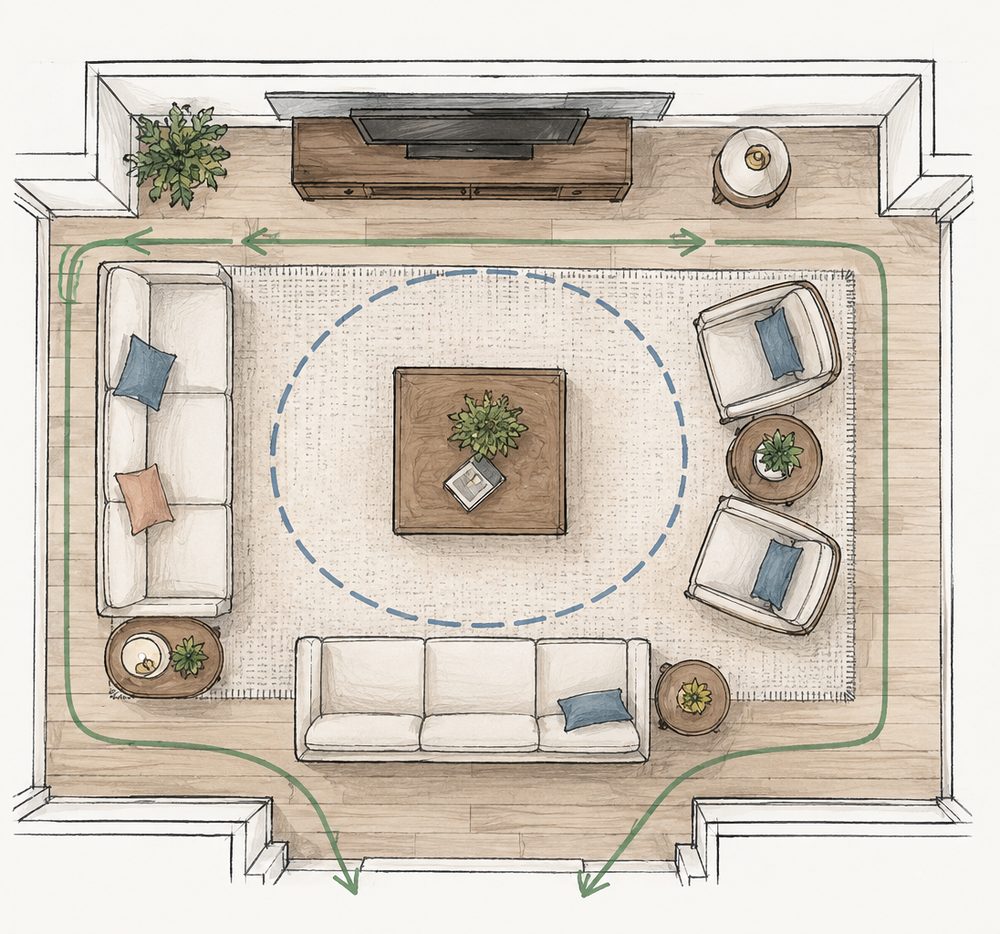
Making the TV the Boss of Everything
Every chair pointed straight at the screen, like the room is a small movie theater. It's great for a game or a movie, but it makes the space feel stiff the other twenty hours of the day.
The Fix
You can plan around the TV without letting it run the show. Angle a chair or two so they work for both the screen and a conversation. A sectional with one chair set slightly off to the side gives you movie night and a real living room. The TV still gets a good seat. It just doesn't get to be in charge.
Using a Rug That's Too Small
This one is everywhere. A rug that's too small floats in the middle of the floor with all the furniture sitting off of it, and it leaves even a nice room feeling unfinished, like a photo in the wrong frame.
The Fix
Go bigger than you think. A good rule of thumb: the front legs of your sofa and chairs should sit on the rug, with a little rug showing on all sides of the group. The right size pulls everything together and instantly makes the room look put-together. It's the fastest before-and-after in the whole space.
Forgetting About Tables and Lighting
You get the seating just right, and then realize there's nowhere to set a drink and nowhere to turn on a soft light after dark. A beautiful arrangement isn't much good if it isn't comfortable to actually use.
The Fix
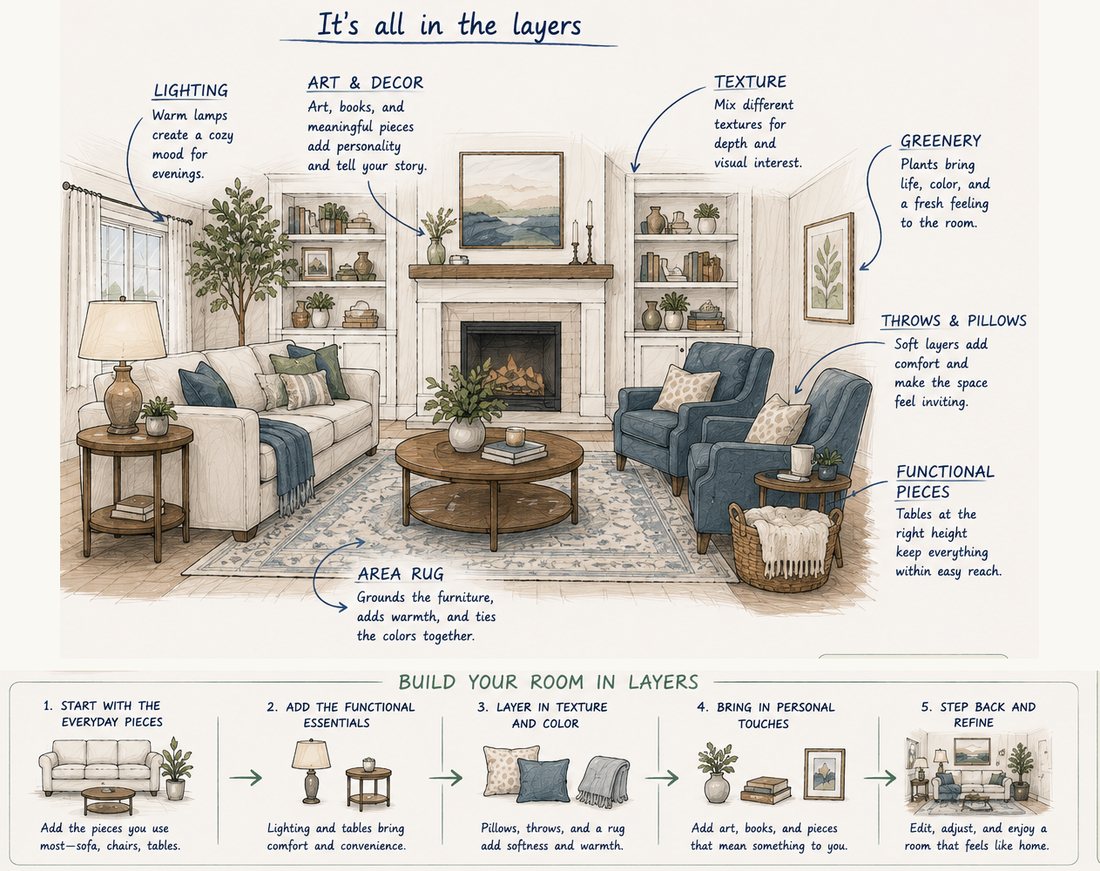
Give every seat something to reach. A side table within arm's reach of each chair, a coffee table people can actually get to, and a lamp or two for warm light in the evening. Overhead light on its own makes a room feel flat. Layer in a few lamps and the whole space softens right up.
Buying Furniture Before Making a Plan
This is the most common one of all, and it's the reason for half the mistakes above. It's easy to fall for a piece, bring it home, and then spend months trying to make the room work around it.
The Fix
Plan the room first, then shop. Measure your space, map out where things go, and know your walking paths and focal points before you buy a thing. That's exactly what our free Room Planner is for, and if you'd rather not do it alone, our complimentary design help is here too. Measure first, plan the room, then shop.
A room that works isn't about buying more.
It's about placing what you have with a little intention.
Where We Come In
Start With a Plan, Not a Purchase
The best-looking rooms almost always start the same way: with a plan. Our free online Room Planner lets you map your space and try out layouts before you buy anything, and our complimentary design services are here whenever you'd like a hand. Bring us your measurements, a few photos, or just an idea, and we'll help you get the layout right the first time.
And if you're ever over at Columbus Park Crossing, come sit down with us. Planning a room is a lot more fun in person.